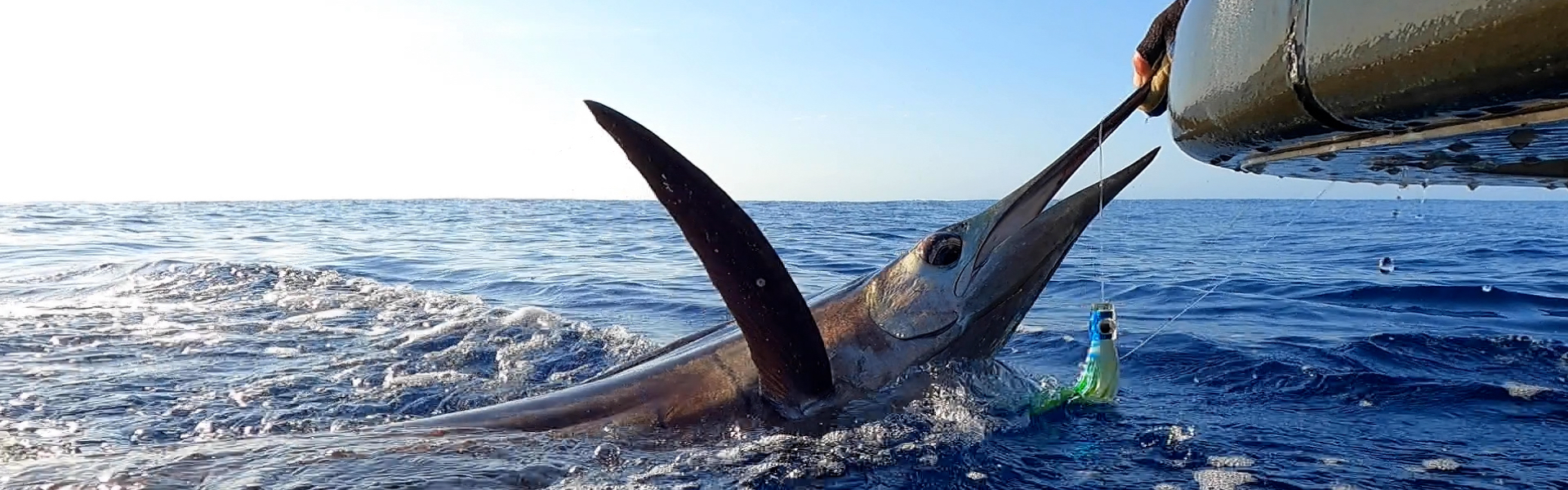
Mangrove Jack
Scientific Name
Lutjanus argentimaculatus
Other Common Names
Jack, Snapper
Size
Up to 1 m and 12 Kg, but usually much smaller.
Conservation Status
Common, widespread
Photo of a Mangrove Jack (c) N.Armstrong
Habitat
Coastal swamp areas and lower river reaches, although has been found more
than one hundered kilometres inland.
Distribution
This species has a huge range throughout the Indo-Pacific region as well
as the Red Sea. In Australia its range includes all northern coastal rivers
systems from northern New South Wales, through Queensland, the Gulf of
Carpentaria, the Northern Territory into Western Australia as far south
as the Ashburton River System.
Reproduction
Little known. Like other fish from its group, mangrove jacks are thought
to produce a large number of pelagic eggs, spawning in estuaries.
Diet
Carnivorous, feeding on other fish.
Angling
An excellent sport fish. Mangrove jacks respond well to lures cast into
heavy cover. The angler needs to exercise authority soon, or risk getting
busted off by these fiesty characters. Mangrove jacks out pull many other
fish many times their size and are great fun to take.
On the table
Excellent eating. Any angler returning with a mangrove jack or two will
be well received by all!
In the aquarium
Small mangrove jacks make very attractive and easy to keep aquarium fish. However, due to their aggressive nature, they should be kept alone.