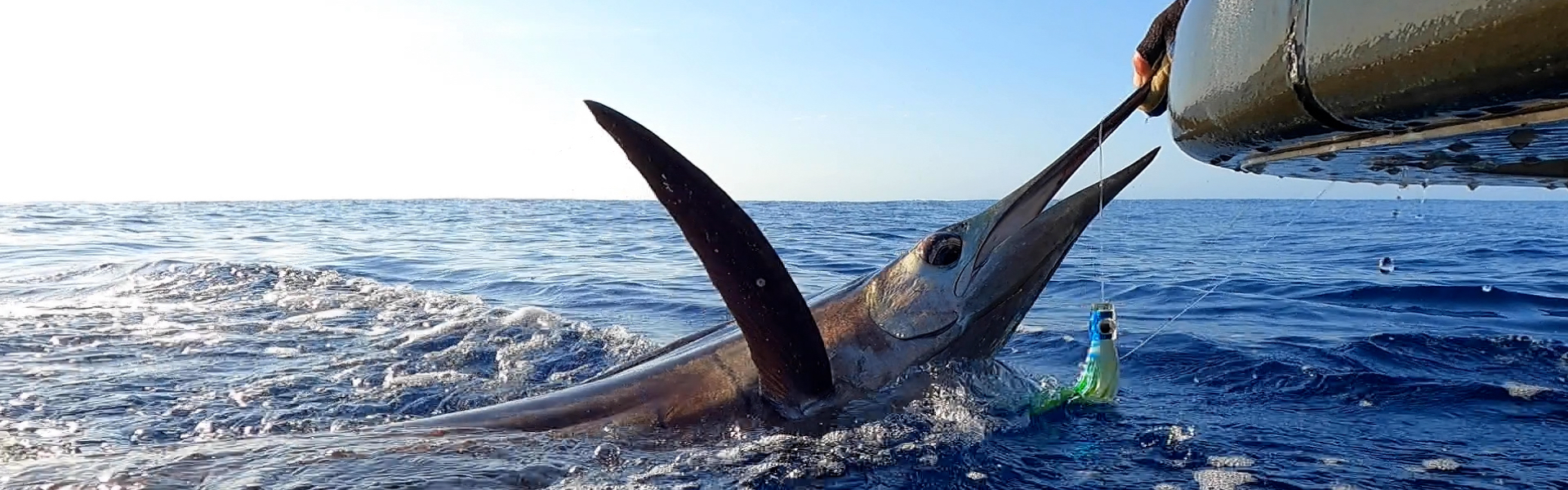
The following Angling Rules and Regulations have been formulated to promote ethical and sportsmanlike angling practices, to establish uniform regulations for the compilation of Australian Gamefish Records and to provide basic angling guidelines for use in fishing tournaments and any other group angling activity.
The word ‘angling’ is defined as catching or attempting to catch fish with a rod, reel, line and hook as outlined in the GFAA Angling Rules and Equipment Regulations.
However, there are some aspects of angling that cannot be controlled through rule-making. Angling rules cannot ensure an outstanding performance from each fish and Australian records cannot indicate the amount of difficulty in catching the fish.
Captures in which the fish has not fought or has not had a chance to fight do not reflect credit on the angler, and only the angler can properly evaluate the degree of achievement in establishing the record.
Only fish caught in accordance with GFAA Australian Angling Rules and within the intent of these rules will be considered for Australian records.
Equipment Regulations
(a) Line
- 1. Monofilament, multifilament and lead core multifilament lines may be used. For line classes, see Australian Record Requirements.
- 2. Wire lines are prohibited.
(b) Line backing
1. Backing not attached to the fishing line is permissible with no restrictions as to size or material.
2. If the fishing line is attached to the backing, the catch shall be classified under the heavier of the two lines. The backing may not exceed the 60kg (130lb) line class and must be of a type of line approved for use in these angling rules.
(c) Double line
The use of a double line is not required. If one is used, it must meet the following specifications:
-
1. A double line must consist of the actual line used to catch the fish.
- 2. Double lines are measured from the start of the knot, braid, roll or splice making the double to the furthermost end of the knot, splice, snap, swivel or other device used for securing the trace, leader, lure or hook to the double line.
Saltwater species: In all line classes up to and including 10kg (20lb) the double line shall be limited to 4.57m (15ft). The combined length of the double line and leader shall not exceed 6.1m (20ft). The double line on all classes of tackle over 10kg (20lb) shall be limited to 9.14m (30ft). The combined length of the double line and leader shall not exceed 12.19m (40ft).
Freshwater species: The double line on all classes of tackle shall not exceed 1.82m (6ft). The combined length of the double line and the leader shall not exceed 3.04m (10ft).
(d) Leader
The use of a leader is not required. If one is used, it must meet the following specifications:
1. The length of the leader is the overall length, including any lure, hook arrangement or other device, and is measured to the bend of the last hook.. The leader must be connected to the line with a snap, knot, splice, swivel or other device. Holding devices are prohibited. There are no regulations regarding the material or strength of the leader.
Saltwater species: In all line classes up to and including 10kg (20lb) the leader shall be limited to 4.57m (15ft). The combined length of the double line and leader shall not exceed 6.1m (20ft). The leader on all classes of tackle over 10kg (20lb) shallbe limited to 9.14m (30ft). The combined length of the double line and leader shall be limited to 12.19m (40ft).
Freshwater species: The leader on all classes of tackle shall be limited to 1.82m (6ft). The combined length of the double line and leader shall not exceed 3.04m (10ft).
(e) Rod
1. Rods must comply with sporting ethics and customs. Considerable latitude is allowed in the choice of rod, but rods giving the angler an unfair advantage will be disqualified. This rule is intended to eliminate the use of unconventional rods.
2. The rod tip must be a minimum of 101.6cm (40in) in length. The rod butt cannot exceed 68.58cm (27in) in length. These measurements must be made from a point directly beneath the centre of the reel. A curved butt is measured in a straight line. (Above measurements do not apply to surf-casting rods.)
(f) Reel
1. Reels must comply with sporting ethics and customs.
2. Power-driven reels of any kind are prohibited. This includes motor, hydraulic or electrically driven reels and any device that gives the angler an unfair advantage.
3. Ratchet handle reels are prohibited.
4. Reels designed to be cranked with both hands at the same time are prohibited.
(g) Hooks for fishing with natural bait
1. For live or deadbait fishing no more than two single hooks may be used. Both must be firmly imbedded in or securely attached to the bait. The eyes of the hooks must be no less than a hook’s length (the length of the largest hook used) apart and no more than 45.72cm (18in) apart. The only exception is that the point of one hook may be passed through the eye of the other hook.
2. The use of a dangling or swing hook is prohibited. Double and treble hooks are prohibited.
3. A two-hook rig for bottom fishing is acceptable if it consists of two single hooks on separate leaders or drops. Both hooks must be imbedded in the respective baits and separated sufficiently so that a fish caught on one hook cannot be foul-hooked by the other.
4. All record applications made for two-hook tackle must be accompanied by a photograph or sketch of the hook arrangement.
5. A lure may be used in conjunction with a natural bait, provided the hook satisfies the requirements of hooks for fishing with natural baits (g) & the lure touches the bait during normal fishing/trolling practices. The hook must NOT precede the bait/lure combo by more than the length of the hook.
(h) Hooks and lures
1. When using an artificial lure with a skirt or trailing material, no more than two single hooks may be attached to the line, leader or trace. The hooks need not be attached separately. The eyes of the hook must be no less than an overall hook’s length (overall
length of the largest hook used) apart and no more than 30.48cm (12in) apart. The only exception is that the point of one hook may be passed through the eye of the other hook. The trailing hook may not extend more than a hook’s length beyond the skirt of the lure. A photograph or sketch showing the hook arrangement must accompany the record application. Clarification: If a hook is cut, then the length of the hook will be deemed to be to the cut – anything beyond the cut will be deemed as leader. See illustration 01.
2. Gang (double or treble) hooks are permitted when attached to plugs and other artificial lures that are specifically designed for this use. Gang hooks must be free-swinging and shall be limited to a maximum of three hooks (either single, double or treble, or a combination of any three). Bait may not be used with gang hooks.
3. Clarification: Assist hooks or other such single hooks that are attached to a lure with a lead constructed of monofilament, multifilament, wire or other such material must conform to the following: When using assist hooks on any artificial lure, other than a skirted lure, the lead cannot be more than 11/2 hook’s length and the bend of the hook must not be more than 4 inches (101mm), whichever is less from the closest point of attachment on the lure. Double and treble hooks may not be used as assist hooks. See Illustration 02.
4. A photograph or sketch of the plug or lure must be submitted with record applications.
5. A gang hook in the intent of this rule is a hook with two or more prongs (ie: multi-pointed hook, not to be confused with ganged hooks as per diagram in Rule G1).
Illustration 01


Illustration 02

(i) Other equipment
1. Fighting chairs may not have any mechanical propelled devices that aid the angler in fighting a fish.
2. Gimbals must be free-swinging, which includes gimbals that swing in a vertical plane only. Any gimbal that allows the angler to reduce strain or to rest while fighting the fish is prohibited.
3. Gaffs and nets used to boat or land a fish must not exceed 2.44m (8ft) in overall length. (When fishing from a bridge, pier, or other high platform or structure, this length limitation does not apply.) In using a flying or detachable gaff, the rope may not exceed 9.14m (30ft). The gaff rope must be measured from the point where the rope is secured to the detachable head to the other end. Only the effective length will be considered. If a fixed head gaff is used, the same limitation shall apply and the gaff rope shall be measured from the same location on the gaff hook. Only a single hook is permitted on any gaff. Harpoon or lance attachments are prohibited. Tail ropes are limited to 9.14m (30ft).
4. Floats are prohibited with the exception of any small flotation device attached to the line or leader for the sole purpose of regulating the depth of the bait. The flotation device must not in any way hamper the fighting ability of the fish.
5. Entangling devices (either with or without a hook) are prohibited and may not be used for any purpose, including baiting, hooking, fighting, or landing the fish.
6. Outriggers, downriggers and kites are permitted provided that the actual fishing line is attached to the snap or other release device, either directly or with some other material. The leader or double line may not be connected to the release mechanism, either directly or with the use of connecting device.
7. Any devices used in conjunction with a lure that could impede the fighting ability of the fish MUST be on a breakaway system.
8. A safety line may be attached to the rod provided that it does not in any way assist the angler in fighting the fish.
Angling rules
- From the time a fish strikes or takes a bait or lure, the angler must hook, fight and land or boat the fish without the aid of any other person, except as provided for in these regulations.
(CLARIFICATION to ANGLING RULE 1.) If the mate is letting out a bait or lure and the reel is in free spool, the rod can be put back in the cover board or handed to the angler. Under no circumstances can any drag be put on the reel. This situation is legal. The rationale is that the hook has not been set with the reel out of gear. When retrieving a bait or lure the fish would be disqualified immediately if the rod is put back into the cover board or transferred to another person as the reel is in gear and the hook has been set.
- If a rodholder is used and a fish takes the bait or lure, the angler must remove the rod from the holder as quickly as possible.
- In the event of a multiple strike on separate lines being fished by a single angler, only the first fish fought will be considered for an Australian record.
- If a double line is used, the intent of the regulations is that the fish is to be fought on the single line for most of the time that it takes to land the fish.
- A harness may be attached to the reel or rod, but not to the fighting chair. The harness may be replaced or adjusted by a person other than the angler.
- Use of a rod belt or waist gimbal is permitted.
- When angling from a boat, once the leader is brought within the grasp of the mate, or the end of the leader is wound to the rod tip, more than one person is permitted to hold the leader.
- One or more gaffers may be used in addition to persons holding the leader. The gaff handle must be in hand when the fish is gaffed.
- The Angling Rules and Equipment Regulations shall apply until a fish is weighed.
THE FOLLOWING ACTS WILL DISQUALIFY A CATCH:
- Failure to comply with equipment or angling regulations.
- The act of persons other than the angler touching any part of the rod, reel or line (including the double line), either bodily or with any device during the playing of the fish, or in giving any aid other than that allowed in the rules and regulations. If any obstacle to the passage of the line through the rod guides has to be removed from the line, then the obstacle (whether berley, floatline, rubber band or other material) shall be held and cut free. Under no circumstances should the line be held or touched by anyone other than the angler during this process.
- Resting the rod in a rodholder, on the gunwale of the boat or any other object while playing the fish.
- Handlining or using a handline or rope attached in any manner to the angler’s line or leader for the purpose of holding or lifting the fish.
- Shooting, harpooning or lancing any fish (including sharks) at any stage of the catch.
- Berleying with or using as bait the flesh, blood, skin or any other part of mammals other than hair or pork rind used in lures designed for trolling or casting.
- Using a boat or device to beach or drive a fish into shallow water in order to deprive the fish of its normal ability to swim.
- Changing the rod or reel while the fish is being played.
- Splicing, removing or adding to the line while the fish is being played.
- Intentionally foul-hooking a fish.
- Catching a fish in a manner that the double line never leaves the rod tip.
- Using a size or kind of bait that is illegal to possess.
- Attaching the angler’s line or leader to part of the boat or other object for the purpose of holding or lifting the fish.
- If a fish escapes before gaffing or netting and is recaptured by any method other than as outlined in the angling rules.
- The act of any person touching any part of the leader when striking or hooking a fish.
The following situations will disqualify A CATCH:
- When a rod breaks (while the fish is being played) in a manner that reduces the length of the tip below minimum dimensions or severely impairs its angling characteristics.
- Mutilation to the fish, prior to landing or boating the catch, caused by sharks, other fish, mammals or propellers that remove or penetrate the flesh. (Injuries caused by leader or line, scratches, old healed scars or regeneration deformities are not considered to be disqualifying injuries.) Any mutilation of the fish must be shown in a photograph and fully explained in a separate report accompanying the record application.
- When a fish is hooked or entangled on more than one line.
GUIDELINES FOR TAG & RELEASE
- All GFAA Angling Rules and Equipment Regulations apply until the fish is tagged.
- Tagpoles must not exceed 4.57m (15ft) overall length.
- The tagpole or holding device must be in the hand when the fish is tagged.
- One or more persons, in addition to the person holding the leader, may tag or assist in tagging the fish.
- The tag needle must not protrude more than 50mm from the end of the tagpole or tag holding device, nor shall it exceed 5mm in diameter.
- Billfish only tag: The tag needle must not protrude more than 76mm from the end of the tag pole or tag holding device, nor shall it exceed 8mm in diameter.
- A fish is considered tagged and released when the tag is secured to the fish.
Rules for tag & release and measure and release
(a) No tournament shall be approved by a State Association that awards points for free release for GFAA tag species. No Tag & Release points shall be awarded in State Association-approved tournaments unless GFAA-approved tags are used.
(b) Measure & Release is allowed for species that have been determined by the GFAA from time to time – see section titled GFAA eligible gamefish for Measure & Release and section Guidelines for Measure & Release.
Note: (i) All GFAA Angling & Equipment regulations shall apply.
(ii) All applicable Tag & Release rules shall apply –
ie items 1, 2 & 3 of the acts that disqualify a Tag & Release.
(iii) No fish can be released after measurement unless it is in a healthy and vigorous state.
(iv) The GFAA Measure & Release card is to be used to record species release information.
2. The use of the ‘billfish only’ tag is MANDATORY to be eligible to win any GFAA Trophies and Awards.
THE FOLLOWING ACTS WILL DISQUALIFY A TAG & RELEASE:
Failure to comply with GFAA angling rules and equipment regulations or tournament tag and release rules.
Failure to comply with all other regulations that disqualify a capture.
Use of a gaff (other than release/jaw gaff for the purpose of tagging).
GFAA eligible gamefish for measure & release
Black jewfish, chinaman, kingfish – yellowtail (under 70cm), mulloway (under 60cm), queenfish (under 60cm), rainbow runner, salmon – Australian (under 40cm), salmon – threadfin, snapper (under 40cm), spangled emperor, tailor, trevally – big eye, giant, gold spot, golden and silver (under 60cm), barramundi, mangrove jack, trout – rainbow and brown.
Note: Any specie that is larger than the minimum sizes noted above will not count in any Measure & Release competition.
GUIDELINES FOR MEASURE & RELEASE
- Only gamefish species as listed for Measure & Release are to be considered by this guideline.
- All GFAA Angling Rules & Equipment Regulation & Codes of Practice to apply until fish is caught, measured and released in a healthy and vigorous state.
- The use of knotless, rubber-coated nets or similarly designed nets that minimise slime and scale removal are to be used – the use of gaffs (other than release/jaw gaff) is prohibited.
- The fish is to be measured using an approved or recognised measuring mat. Measurements between centimetre increments shall be measured at the lower of the two increments; ie 45-46cm will be recorded as 45cm.
- Once measured, the fish is to be returned to the water as quickly as possible, and supported until it is able to swim away in a healthy and vigorous state. If the fish dies during this process, it is the skipper and angler’s responsibility to disqualify the catch.
- All measurements and data must be recorded on an approved GFAA Measure & Release card that is to be returned to the angler’s club for processing.
- Fish caught and released under these guidelines may be eligible for club or state points. (Check with your club or state for this.)
EQUIPMENT REGULATIONS
(a) Line
Any type of fly line and backing may be used. The breaking strength of the fly line and backing are not restricted.
(b) Leader
Leaders must conform to generally accepted fishing customs.
The leader includes a class tippet and, optionally, a shock tippet. A butt or taper section between the fly line and the class tippet shall also be considered part of the leader, and there are no limits on its length, material, or strength.
The class tippet must be made of non-metallic material and either attached directly to the fly or to the shock tippet, if one is used. The class tippet must be at least 38.10cm (15in) long (measured inside connecting knots). With respect to knotless, tapered leaders, the terminal 38.10cm (15in) will also determine tippet class. There are no maximum length limitations. The breaking strength determines the class of the tippet.
A shock tippet, not to exceed 30.48cm (12in) in length, may be added to the class tippet and tied to the lure. It can be made of any type of material, and there is no limit on its breaking strength. The shock tippet is measured from the eye of the hook to the single strand of class tippet and includes any knots used to connect the shock tippet to the class tippet.
In the case of the tandem hook fly, the shock tippet shall be measured from the eye of the leading hook.
(c) Rod
Regardless of material or number of sections, rods must conform to generally accepted flyfishing customs and practices.
A rod shall not measure less than 1.82m (6ft) in overall length. Any rod that gives the angler an unsporting advantage will be disqualified. Extension butts are limited to 15.24cm (6in).
(d) Reel
The reel must be designed expressly for flyfishing. There are no restrictions on gear ratio or type of drag employed, except where the angler would gain an unfair advantage. Electric or electronically operated reels are prohibited.
(e) Hooks
A conventional fly may be dressed on a single hook or double hook or two single hooks in tandem. The second hook in any tandem fly must not exceed beyond the wing material. The eyes of the hooks shall be no farther than 15.24cm (6in) apart. Treble hooks are prohibited.
(f) Lures
The lure must be a recognised type of artificial fly, which includes streamer, bucktail, tube fly, wet fly, dry fly, nymph, popper and bug. The use of any other type of lure or natural or preserved bait, either singularly or attached to the fly, is expressly prohibited.
The fact that a lure can be cast with a fly rod is not evidence in itself that it fits the definition of a fly. The use of any lure designed to entangle or foul-hook a fish is prohibited.
No scent, either natural or artificial, is allowed on flies. The use of scented material in a fly is prohibited.
(g) Gaffs and nets
Gaffs and nets used to boat or land a fish must not exceed 2.44m (8ft) in overall length. (When fishing from a bridge, pier or other high stationary structure, this length limitation does not apply.)
The use of a flying gaff is not permitted. Only a single hook is permitted on any gaff. Harpoon or lance attachments are prohibited.
A rope or any extension cannot be attached to the gaff.
(h) 15kg category rules
- 15kg tippet is for billfish and sharks only.
- Shock tippet length is not to exceed 100cm (1m).
- A minimum 500cm of fly line must be used.
- Flying gaffs are permitted for this line class only.
- All other GFAA rules and regulations for flyfishing apply.
Fly Fishing Angling Rules
- The angler must cast, hook, fight and bring the fish to gaff or net unaided by any other person. No other person may touch any part of the tackle during the playing of the fish or give aid other than taking the leader for gaffing or netting purposes.
- Casting and retrieving must be carried out in accordance with normal customs and generally accepted practices. The major criterion in casting is that the weight of the line must carry the lure, rather than the weight of the lure carrying the line. Trolling a lure behind a moving watercraft is not permitted. The craft must be completely out of gear both at the time the fly is presented to the fish and during the retrieve. The maximum amount of line that can be stripped off the reel is 36.57m (120ft) from the lure.
- Once a fish is hooked, the tackle may not be altered in any way, with the exception of adding an extension butt.
- Fish must be hooked on the lure in use. If a small fish takes the lure and a larger fish swallows the smaller fish, the catch will be disallowed.
- One or more people may assist in gaffing or netting the fish.
- The Angling and Equipment Regulations shall apply until the fish is weighed.
THE FOLLOWING ACTS WILL DISQUALIFY A CATCH:
- Failure to comply with Equipment or Angling Regulations.
- The act of persons other than the angler touching any part of the rod, reel or line, either bodily or with any device, during the playing of the fish, or in giving any aid other than that allowed in the rules and regulations. If an obstacle to the passage of the line through the rod guides has to be removed from the line, then the obstacle shall be held and cut free. Under no circumstances should the line be held or touched by anyone other than the angler during this process.
- Resting the rod on any part of the boat, or on any other object, while playing the fish.
- Handlining or using handline or rope attached in any manner to the angler’s line or leader for the purposes of holding or lifting the fish.
- Intentionally foul-hooking or snagging a fish.
- Shooting, harpooning or lancing any fish (including sharks) at any stage of the catch.
- Berleying with flesh, blood, skin or any part of mammals.
- Using a boat or device to beach or drive a fish into shallow water in order to deprive the fish of its normal ability to swim.
- Attaching the angler’s line or leader to part of a boat or other object for the purpose of holding or lifting the fish.
- If a fish escapes before gaffing or netting and is recaptured by any method other than as outlined in the angling rules.
THE FOLLOWING SITUATIONS WILL DISQUALIFY A CATCH:
- When a rod breaks (while the fish is being played) in a manner that reduces its length below minimum dimensions or severely impairs its angling characteristics.
- When a fish is hooked or entangled on more than one line.
- Mutilation to the fish, prior to landing or boating the catch, caused by sharks, other fish, mammals or propellers that remove or penetrate the flesh. (Injuries caused by leader or line, scratches, old healed scars or regeneration deformities are not considered to be disqualifying injuries.) Any mutilation of the fish must be shown in a photograph and fully explained in a separate report accompanying the record application.