THE
NSW GAMEFISH TAGGING PROGRAM
The
Gamefish Tagging Program (GTP) was established in the
1970’s primarily to give recreational fishers,
and in particular gamefishers, the opportunity to assist
in gathering
research data. NSW Fisheries supplies fish tags to members
of registered fishing clubs affiliated with the Game
Fishing Association of Australia (GFAA). These members
undertake
the tagging of gamefish since the growing tendency for
game and sportfishers to only weigh potentially record
or tournament
winning fish provides an excellent opportunity for tagging
of large numbers of otherwise discarded gamefish on an
economically viable basis. Four types of tag are currently in use:
• small and medium size nylon-headed single barbed
• stainless steel-headed tag with a plastic streamer
• special nylon head Billfish multi-barbed.  All
the tags are labeled with a number and a return address
printed on the streamer. Each tag is attached to
a numbered, pre paid card with a description of where
to place the
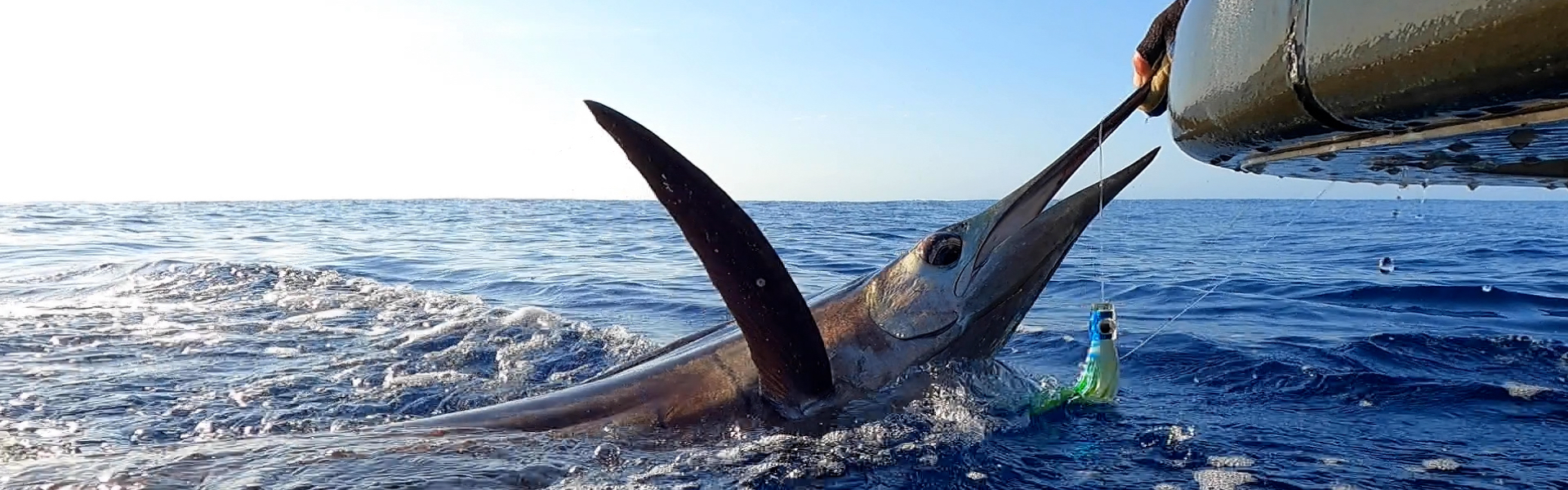
tag in the fish. Tags are usually placed in the shoulder of fish
brought alongside the boat. Data recorded includes
the date and location of fish, boat, angler and
captain’s
name, estimated size of fish, and its condition. The program operates through 84 Gamefishing Clubs throughout
Australia, with the main concentration being along the East
Coast. Over 18,000 anglers have been involved in the program,
each tagging at least one fish. The main species tagged include
billfish (black, striped and blue marlin, sailfish, spearfish,
swordfish), tunas (yellowfin, bluefin, big-eye, albacore),
sharks (whalers, tiger, mako, thresher, blue, hammerhead),
kingfish, mackerel and other pelagic species. The
GTP is very popular with gamefishers and sportfishers
who regard the continuation of the program as essential
to the long term existence of their sport. Since its
inception,
the program has expanded both geographically and in terms
of numbers of fish tagged and recaptured. All the large
saltwater gamefish tournaments held in Australia have
a large tagging
section within them. This “release them alive” ethic
has spread throughout the gamefishing community and is
largely due to this program. The GTP provides information on the movements and distribution
of fish, encourages the release of juvenile fish, discourages
the retention of large catches, encourages anglers to adhere
to sustainability principles, develops an appreciation in
anglers for the biology of gamefish and develops an appreciation
of the bag and size limits. In this regard the GTP contributes
to the sustainability of fishery resources while educating
the fishing community about fisheries laws. The program may
also contribute to a sharing of the resource, and facilitate
the perception of community ownership and responsibility
for fishery resources.
|